
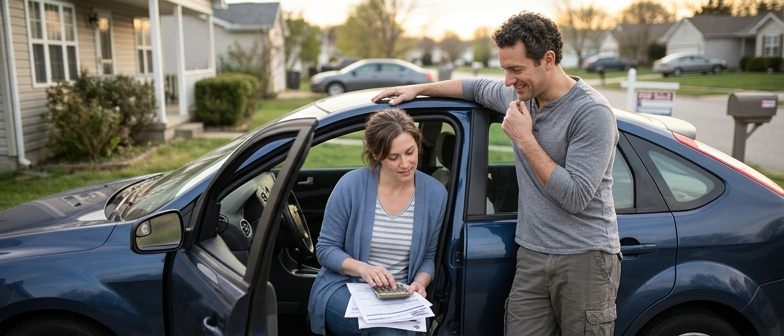
What “cheap car insurance” really means today
When people look for cheap car insurance, they rarely want the absolute lowest price. They want the best cheap car insurance that still protects their car, savings, and credit if something goes wrong. Truly budget‑friendly coverage balances your car insurance cost per month with limits that can handle a real accident. That means looking past teaser prices to be sure the policy includes enough liability coverage, deductibles you can afford, and the specific protections you would struggle to pay out of pocket.
Cheap car insurance today is less about a rock‑bottom number and more about value for what you pay. Two drivers might see a similar monthly premium, but one offer can hide weak coverage that leaves them exposed after a serious crash, while another slightly higher quote could save thousands when they file a claim. Understanding that difference lets you compare options with a clear head and judge each policy by overall protection, not just the number on the screen.
Key factors that drive your monthly car insurance cost
What you pay for car insurance each month comes from a few major inputs that insurers weigh differently. Your driving record is usually the biggest one, because at-fault accidents, DUIs, and multiple tickets flag you as higher risk and push premiums up, while a clean history helps you qualify for cheap car insurance from more companies. Your vehicle matters too: newer cars, high-end models, and vehicles that are expensive to repair or easy to steal generally cost more to insure than modest sedans or minivans with strong safety scores. Where you live and park also affects your bill, since dense areas with more crashes, theft, or higher medical and repair costs tend to generate higher prices than quieter regions.
Insurers also look at how much you drive, how you use your car, and how much protection you choose. A long daily commute or using your car for business often raises your car insurance cost per month compared with someone who drives only a few miles for errands. Higher liability limits and adding comprehensive and collision coverage give you stronger protection but increase the price, while larger deductibles can move a policy closer to the cheapest options if you are comfortable paying more out of pocket after a claim. Your age, insurance history, and in many states your credit-based insurance score can further shift the final premium, so two people shopping at the same time may see very different prices for similar coverage.
| Pricing factor | Control level | Typical impact on monthly cost | Tip for cheaper coverage |
|---|---|---|---|
| Driving record | Partly controllable | High impact | Avoid violations and at-fault claims |
| Vehicle type and safety | Partly controllable | Medium to high impact | Choose practical models with strong safety features |
| Location and parking | Not directly controllable | Medium impact | Use secure parking and update address if you move |
| Annual mileage and use | Mostly controllable | Medium impact | Limit unnecessary driving and avoid business use when possible |
| Coverage limits and deductibles | Mostly controllable | High impact | Raise deductibles only to a level you can afford |
| Age, credit, insurance history | Partly controllable | Medium impact | Maintain continuous coverage and healthy credit habits |
Coverage choices that raise or lower your premium
The price you pay for cheap car insurance depends heavily on the coverage levels you choose. Higher liability limits and extra protections provide stronger financial security after a crash, but they also push up your car insurance cost per month. State minimum liability usually delivers the lowest bill, yet it can leave you covering medical costs or repairs yourself if a serious accident causes damage beyond those basic limits.
Deductibles and optional coverages let you adjust the balance between protection and affordability. Selecting a higher deductible on collision and comprehensive typically lowers what you pay each month, but you must be ready for a larger out-of-pocket cost when you file a claim. Cutting extras like rental reimbursement or roadside assistance can also reduce your premium, but may be risky if you rely on your vehicle every day. To keep coverage affordable, decide how much financial risk you can realistically handle on your own.
How to compare auto insurance quotes the smart way
When you are chasing the best cheap car insurance, the first rule is to compare car insurance quotes on equal footing. Do not look only at the price; line up liability limits, comprehensive and collision deductibles, and extras like roadside assistance or rental reimbursement so each offer is truly apples to apples. A quote that looks like one of the best auto insurance quotes can turn out to be bare‑bones coverage that leaves you exposed if you total your car or cause a serious injury, so treat ultra‑low prices as a signal to double‑check what is actually included.
To really compare auto insurance quotes, review how each company treats your driving record, annual mileage, vehicle type, garaging address, and credit‑based insurance score where allowed. One insurer might look cheapest for a clean‑record commuter, while another delivers better value for a driver with an older vehicle or a recent accident. Scan each proposal for built‑in discounts on things like telematics programs, multi‑car policies, and bundled home and auto, because these can quietly turn a mid‑range offer into one of the best auto insurance quotes for your specific profile.
A smart comparison also looks ahead, not just at today’s number. Check how flexible each policy is if you need to adjust coverage mid‑term, whether accident forgiveness or diminishing deductibles are available, and how claims are handled in real life, using independent reviews rather than marketing promises. As you narrow down options for the best cheap car insurance, consider running a fresh set of quotes each renewal, since your life circumstances and carrier pricing can change quickly; a brief review once or twice a year can keep you from overpaying while still protecting your car, your budget, and your future liability.
Using online quote tools for faster comparisons
Online quote tools make it much easier to hunt for cheap car insurance without calling a dozen agents. When you request an auto insurance quote online, you can see price ranges, coverage options, and available discounts laid out in minutes. Many platforms now analyze offers from several insurers side by side, helping you quickly spot which companies are delivering the best auto insurance quotes for the coverage level you actually need, not just the lowest number on the page.
To get real value from these tools, submit the same details every time so you can fairly compare auto insurance quotes. Enter identical drivers, vehicles, annual mileage, and coverage limits on each site, then compare car insurance quotes by looking at deductibles and extras, not only the total price. This consistent approach lets you see who really offers the best cheap car insurance for your situation, and helps you cut your car insurance cost per month without sacrificing the protections that matter most.
Getting an auto insurance quote online in under a minute
If you are shopping for cheap car insurance, getting an auto insurance quote online is usually the fastest way to see realistic price ranges for your vehicle and driving profile. Many comparison tools now promise a car insurance quote in 60 seconds, using basic details like your address, vehicle, mileage, and recent tickets to estimate your premium. These quick forms are built for shoppers who want numbers right away, so you can filter out companies that are far outside your budget and focus on options that look competitive for the coverage level you want.
However, the best auto insurance quotes are not just the ones that appear first or come back the fastest. A one‑minute estimate is only a starting point, because it may not reflect every discount, your full driving history, or coverage choices like higher liability limits and comprehensive protection. To turn that quick estimate into a solid offer, review the coverage line by line, adjust deductibles, and confirm the tool’s assumptions about how you drive, then refine and compare several detailed quotes side by side so you are choosing on value, not only on speed.
Q&A
-
What does “cheap car insurance” actually mean for real-world protection?
It means getting the lowest price you can without stripping away coverage you’d truly need after a serious crash, like solid liability limits and deductibles you can afford. -
Which factors most affect my car insurance cost per month?
Insurers weigh your driving record, age, vehicle type and value, where you live and park, annual mileage, and prior insurance history, then layer on any discounts you qualify for. -
How should I compare auto insurance quotes to find real value?
Compare car insurance quotes with the same liability limits, deductibles, and extras; once coverage is matched, you can confidently pick the lowest price from a reputable insurer. -
Are fast online tools accurate when they promise a car insurance quote in 60 seconds?
They’re usually solid estimates based on limited info; the final price is confirmed after the insurer verifies details like driving history, vehicle features, and prior claims. -
What should I know about an Otto insurance quote and reviews before I decide?
Use an Otto insurance quote as a comparison point, then read multiple Otto insurance reviews and cross-check against several of the best auto insurance quotes before choosing.
Sources and further reading on car insurance
- https://www.consumerreports.org/cro/car-insurance.htm
- https://www.insurance.com/auto-insurance/how-car-insurance-rates-work.html
- https://www.progressive.com/auto/discounts/cheap-car-insurance/
- https://www.nationwide.com/lc/resources/auto-insurance/articles/cheap-car-insurance-quotes
- https://www.consumerreports.org/cro/car-insurance/credit-scores-affect-auto-insurance-rates/index.htm